What is a non-technical founder?
A non-technical founder focuses on customer insight, product judgment, distribution, and execution, not coding. Your strength is understanding the problem deeply and knowing who will pay for the solution. You bring the vision, find early users, and hire the right people to build it. Investors trust non-technical founders when you show clear customer access, a plan to hire skilled developers, and awareness of technical risks. For example, if you run a local service business and spot a gap in scheduling tools, your firsthand experience is valuable proof. You do not need to code to lead the build. Instead, focus on what only you can do: define the need, talk to users, and guide the product.
whether you need a technical co-founder
Do you need a developer as a non-technical founder?
You should hire a developer when your idea needs custom logic, unique workflows, or tight integration that no-code tools cannot support. A developer builds what templates and drag-and-drop builders cannot.
No-code platforms can work if your app is simple, like a form, a blog, or a basic store with standard features. One founder rebuilt part of their product using a no-code tool, showing it can handle early-stage needs.
But when you need real-time updates, user roles, offline sync, or AI features, no-code tools fall short. Custom apps like Legease or MojoDocs need a developer.
If your business relies on speed, security, or a standout user experience, a developer is worth it. For simpler needs, start with no-code and upgrade later.
When a developer beats an AI app builder, you can compare your options.
How much does it cost to hire a developer in India?
As an estimate, a minimum viable product (MVP) with 3 to 5 core features on one platform costs ₹3 to 5 lakh. This assumes a focused scope, no complex backend, and a single developer working directly with you. Statutory costs like provident fund, ESI, and gratuity add 12 to 15 percent to the base cost when hiring full-time. For contract work, developers charge $10 to $80 per hour. The total cost depends on your app’s complexity, not just the developer’s rate. For example, a simple task manager app may fit the ₹3 to 5 lakh range. While one with real-time sync or AI features will cost more.
You can see a full breakdown in the cost to build a quick commerce app.
Want a number for your idea? Send one line on WhatsApp. I reply with what drives the cost and what to cut.
Message me on WhatsAppWhat factors change the price of your app?
The cost of your app can vary by up to 3× based on features, compliance needs, and required skills. Real-time features like live chat, GPS tracking, or live feeds need a more complex backend and can add 25 to 50% to server-side costs. This is because they require persistent connections, low-latency responses, and scalable infrastructure.
Fintech or health apps cost more because they must meet strict security, data encryption, and regulatory compliance standards. You must budget extra for audits, data localisation, and secure storage. For example, a health app handling patient records needs stronger safeguards than a basic to-do list. See how to handle app security for steps you can take.
AI, blockchain, or DevOps skills can raise the developer rate by 30 to 50% in 2026. These are niche areas with fewer experienced developers. If your app uses AI for document parsing or automated decisions, expect higher costs. The same applies if you need custom deployment pipelines or cloud automation.
How long does it take to build your app?
A simple app takes 4 to 6 weeks to build. This applies to apps with 3 to 5 core features, one user type, and no real-time or third-party integrations. For example, a habit tracker with offline support and daily reminders fits this timeline.
Medium projects take 2 to 3 months. These include apps with multiple user roles, a custom admin panel, or integrations like payment gateways or government APIs. For instance, a legal document assistant with AI summarisation and secure sharing would fall here.
Complex platforms take 4 to 6 months. The timeline depends on how clear your requirements are at the start. Using a flow diagram template for non-technical founders can cut delays by clarifying user steps early.
How an engagement runs: idea to launch
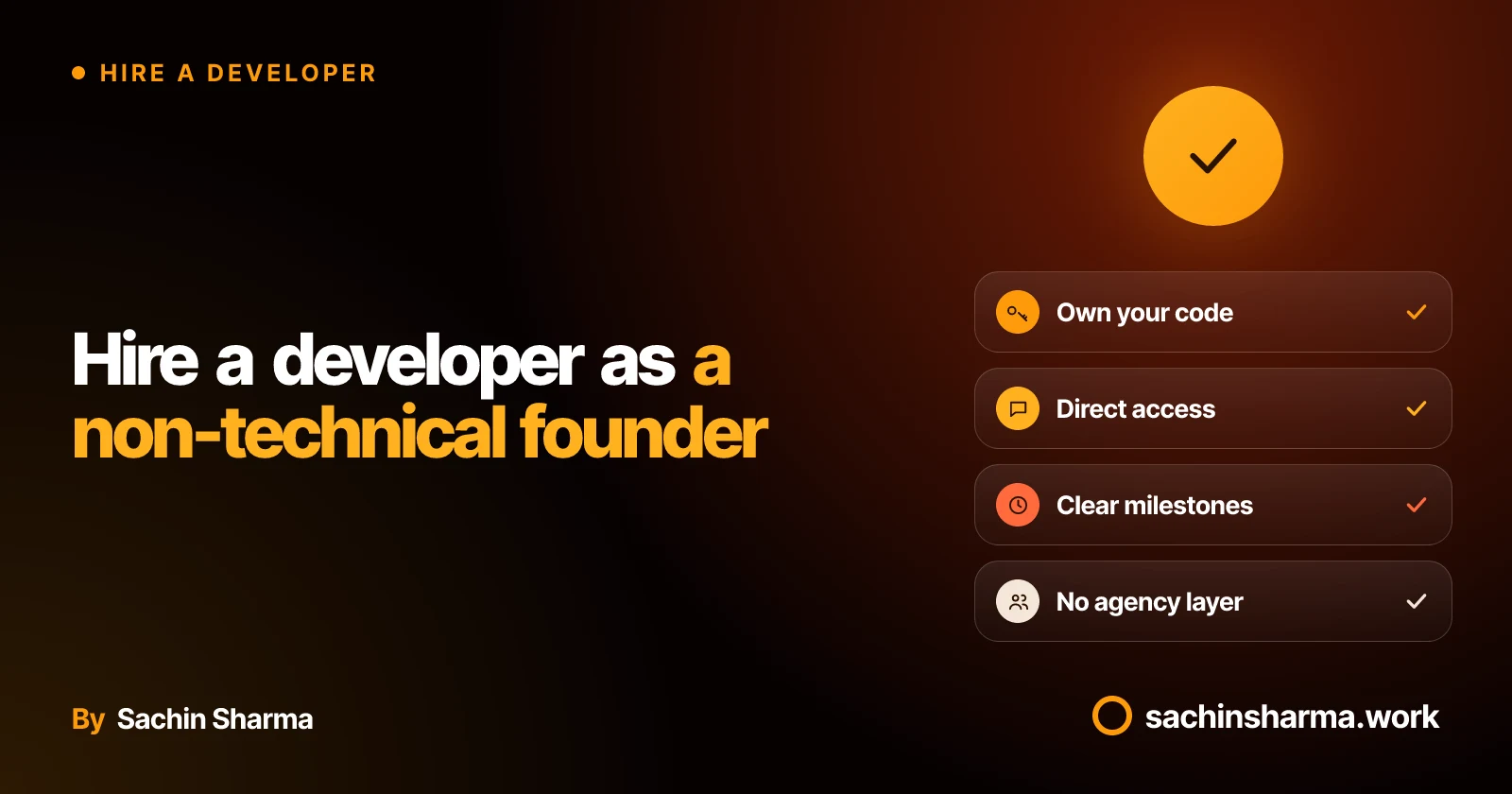
An engagement starts with a one-page brief that defines your customer problem, desired outcome, constraints, acceptance criteria, owner, and deadline. This keeps the project focused and avoids scope creep. I work in weekly deliverables, so you see progress every seven days. You get direct access to me, with no agency layers or handoffs.
The key milestones are: (1) sign-off on the one-page brief, (2) design mockups approved. (3) core features built and tested, (4) feedback round completed, and (5) launch-ready version delivered. Each milestone is time-bound and tied to a deliverable.
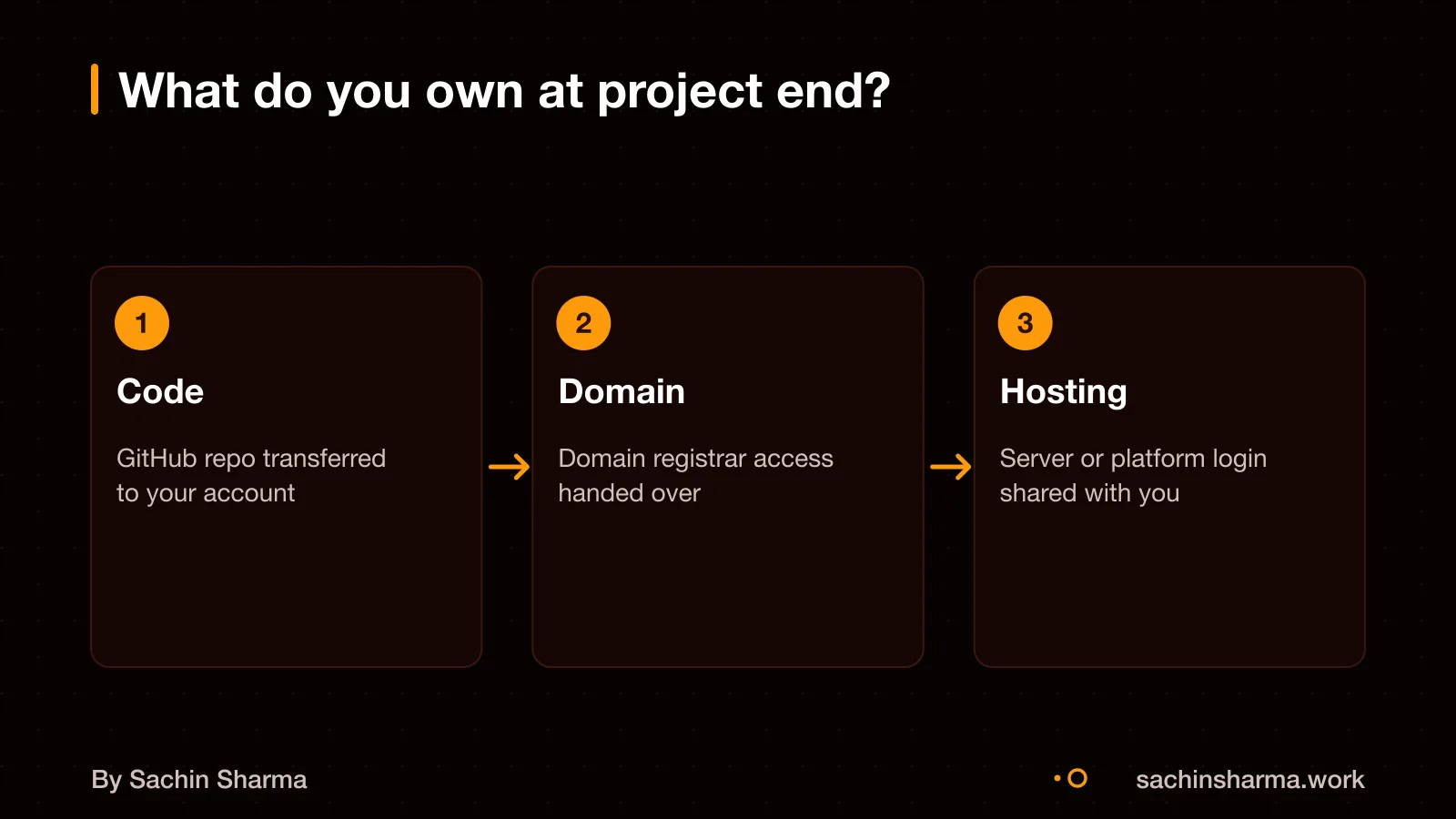
We hand over code and accounts at every stage. You own the code from day one. I set up the GitHub repository under your account or grant you full access. All third-party accounts (like Firebase, domain registrar, or hosting) are either created in your name or have admin access transferred to you. This ensures you are never locked in.
For a real example of how a project like this is run, see how a project like this is run.
Who owns the code and accounts?
You own the code once it is delivered and transferred, as per our contract. This means you have full rights to the source code from day one after handover. No evidence shows ongoing access during the build, so we agree on access terms before work starts.
You also own the domain and hosting accounts. I help you set them up in your name, so you control them directly. This avoids lock-in and keeps your project secure.
For example, if you build a business website, you own the code. You also own the domain, like yourbusiness.com. You own the hosting account where the site lives online. You can move or update it anytime.
If you hire a developer for a small business website, ownership ensures you keep control if the project changes direction or team.
Worked example: 8-week MVP for ₹4.2 lakh
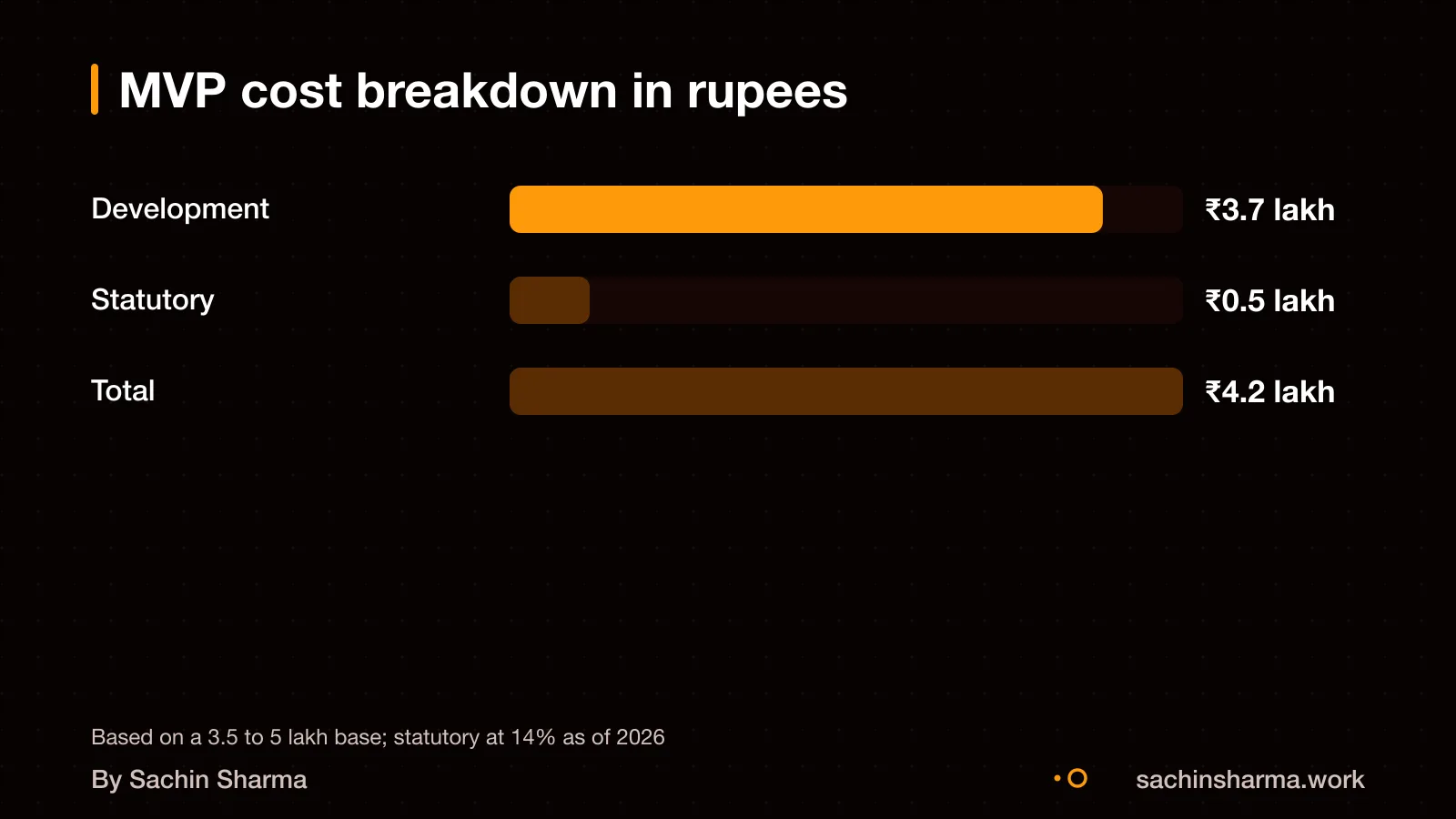
As an estimate, an 8-week MVP costs ₹4.2 lakh. This includes ₹3.7 lakh in development and ₹0.5 lakh in statutory charges. The estimate assumes one mid-level developer working full time at ₹75,000 per month. Development costs usually fall between ₹3 to 5 lakh for tightly scoped apps with 3 to 5 core features on a single platform. Statutory costs include provident fund, ESI, and gratuity. These add 12 to 15% to the base salary.
For example, a habit-tracking app with offline sync, daily reminders, and progress charts could fit this model. It would run on Android only. It would use a simple backend like Firebase. It would avoid complex features like payments or third-party integrations. You own the code and accounts from day one.
The ₹3.7 lakh development cost comes from 8 weeks (about 1.83 months) at ₹75,000 per month: 8 weeks at ₹75,000 per month equals ₹3.7 lakh. Statutory costs at 15% of ₹3.7 lakh are ₹55,500, rounded to ₹0.5 lakh. Total = ₹3.7 lakh + ₹0.5 lakh = ₹4.2 lakh.
This estimate assumes no major changes during development. It also assumes clear requirements from the start and weekly progress checks. If you add iOS support or real-time features, the cost will rise.
How do we communicate during the project?
You and I will agree on a communication method before work starts. This agreement should be in writing, such as in the contract or a project plan.
Ask your developer to state their preferred channel, like WhatsApp, email, or a project tool, and how often they will share updates. Look for a clear schedule, such as a weekly message or a daily log.
Insist on a method that lets you see progress without blocking the work. For example, short voice notes, a shared checklist, or a live demo link once a week.
Since no standard method is set, your best check is to ask for their plan before signing. A reliable developer will offer one, even if it is simple.
Freelancer vs agency: what suits you?
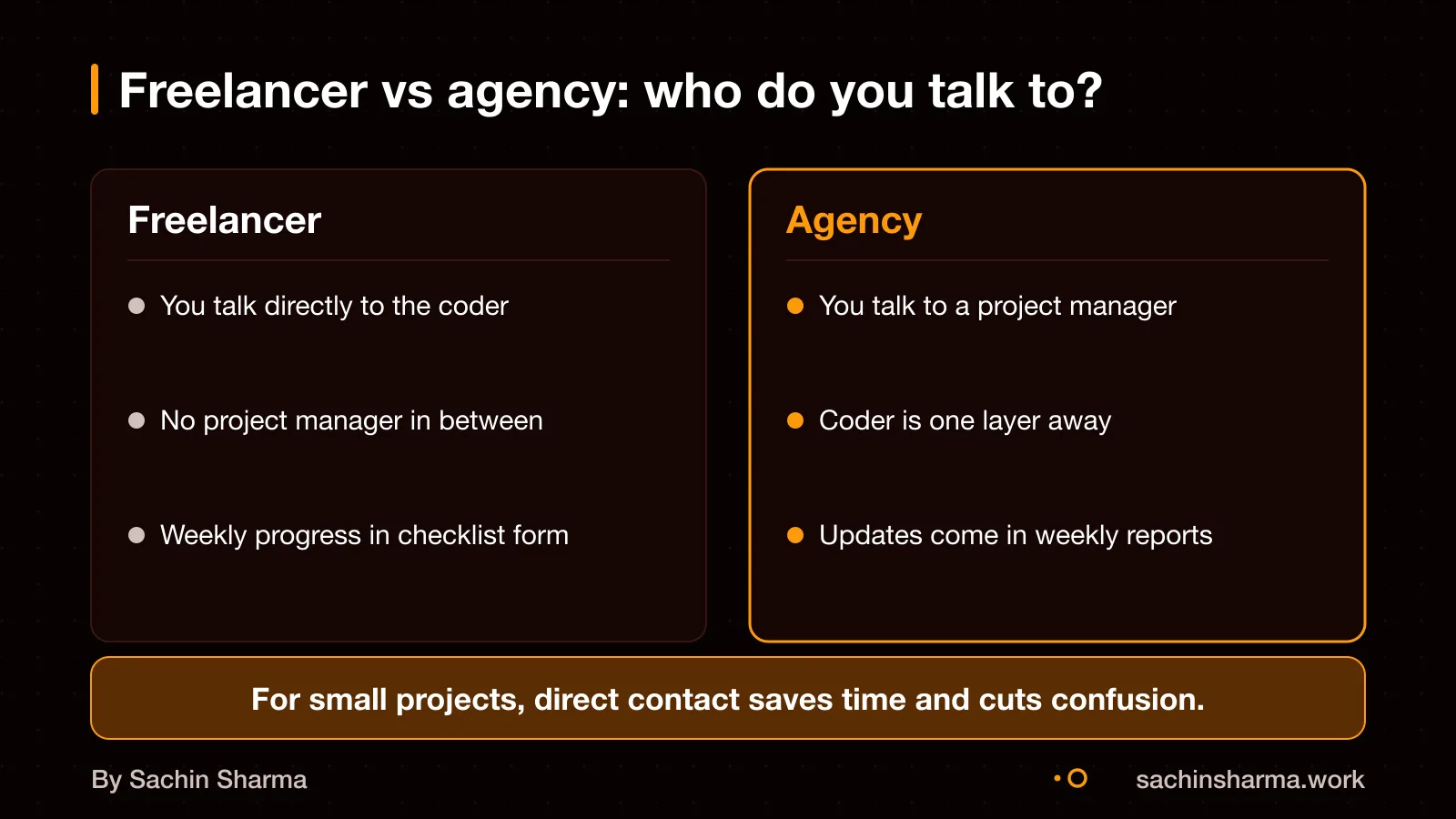
Hiring a freelancer or an agency depends on your budget, scope, and control needs. A freelancer like me works directly with you at a lower cost, with no middlemen. You get clear ownership of code and faster decisions. Agencies offer more roles, such as designers and testers, but at higher prices and with more layers.
For non-technical founders, a freelancer is often better if your project is focused and well-defined. You save money and build a direct relationship. Agencies suit larger projects needing multiple skills at once. But they may charge ₹1.5 to 3 times more for the same work.
Before choosing, define your project scope and budget clearly. A small business website, for example, can be built faster and cheaper with a freelancer. If your needs grow later, you can still bring in more help.
anchor
How to verify examples are real
You can check live apps on the App Store or Google Play to see what the developer built. For open-source work, look at the developer’s GitHub or public repositories. These show real code and project scope.
To confirm a developer made a live site or tool, ask for a direct link to the app or platform they worked on. You can also ask them to show their role in the project, such as admin access or development history. Some projects like FlashDrop or DevDex run locally and have no accounts, so seeing the app in action is the best proof.
For client work, the developer may not share source code or contacts due to privacy. In those cases, ask for a signed statement, a public launch page, or a demo video. You can also check linked websites like atherraipur.com, which is live and public.
What happens after the app launches?
Bug fixing and maintenance are not included by default after launch. You must agree on post-launch support terms in your contract before development starts.
Without a written agreement, you should assume no ongoing fixes or updates. Ask for a support clause that states what is covered, for how long, and at what cost. This protects you if issues appear later.
For apps used in the field, ongoing maintenance can be critical. Consider hiring a developer who offers support plans, especially for offline-first apps where updates must sync correctly.
hire a developer for an offline-first app
When hiring a developer is not the right choice
When hiring a developer is not the right choice
You should use no-code tools when your workflow is simple and standard, such as collecting forms, sending emails, or managing a basic inventory. Tools like Google Forms, Airtable, or Zoho Creator can handle these without custom code. They let you move fast and test ideas for under ₹10,000.
An off-the-shelf product is better when your need is common and well-solved, like accounting, payroll, or website hosting. For example, Tally, Zoho Books, or WordPress with plugins can serve most small businesses without any development. You save time and cost by using what already works.
If your idea does not need unique logic, real-time sync, or deep integrations, custom development may be overkill. Start with the simplest tool that solves the problem. You can always rebuild later when you have users and revenue.
Next step: message me on WhatsApp with what you want to build. No forms, no sales team.
Message me on WhatsAppAssumptions behind the numbers
- MVP takes 8 weeks to build
- Developer rate is mid-level (₹10-20 lakh per year)
- Code ownership terms are in the contract
Write your brief
A developer can only price what you describe. Fill the fields, and the brief writes itself.
Ask these of any developer who reads it
- Who will write the code, by name?
- Is offline mode tested in poor signal areas?
- How is customer data protected?
- What happens if the server is down for a day?
- Do you own the full codebase after launch?
- What does post-launch support include?
Questions people ask
Your idea needs a developer if it requires custom logic, unique workflows, or integrations that no-code platforms cannot handle. Use a no-code tool for simple apps with standard features and no complex backend. For deeper control and scalability, a developer builds what templates cannot support.
Your one-page product brief must state the customer problem, desired outcome, constraints, acceptance criteria, owner, and deadline. This keeps the project focused and aligns everyone on what success looks like. Use it for every major feature or launch.
Ask for test coverage near 100 percent, a cyclomatic complexity score under 10, and a pylint rating close to 10.0. These metrics show the code is testable, readable, and maintainable. Request the reports directly from the developer.
Use a contract that clearly defines the scope, payment terms, intellectual property rights, and termination conditions. This protects both sides and sets clear expectations. Discuss equity, vesting, and decision rights only if bringing on a co-founder.
You must pay GST only if the developer is GST-registered and you are using the service for business. If you are a business owner claiming input credit, check the developer's GSTIN and include it in your invoice. Check this for your case with a chartered accountant.
Ensure your contract includes clauses on communication, code access, and termination for non-performance. Keep regular backups of the codebase and set up automated syncs. If the developer disappears, legal recovery may be possible through small claims or consumer court.
Yes, you can hire me part-time for a defined scope and timeline. This keeps costs low and progress steady while you search. Make sure the work is modular and well-documented so the next person can take over easily.