What is Lovable, and how is it different from hiring a developer?
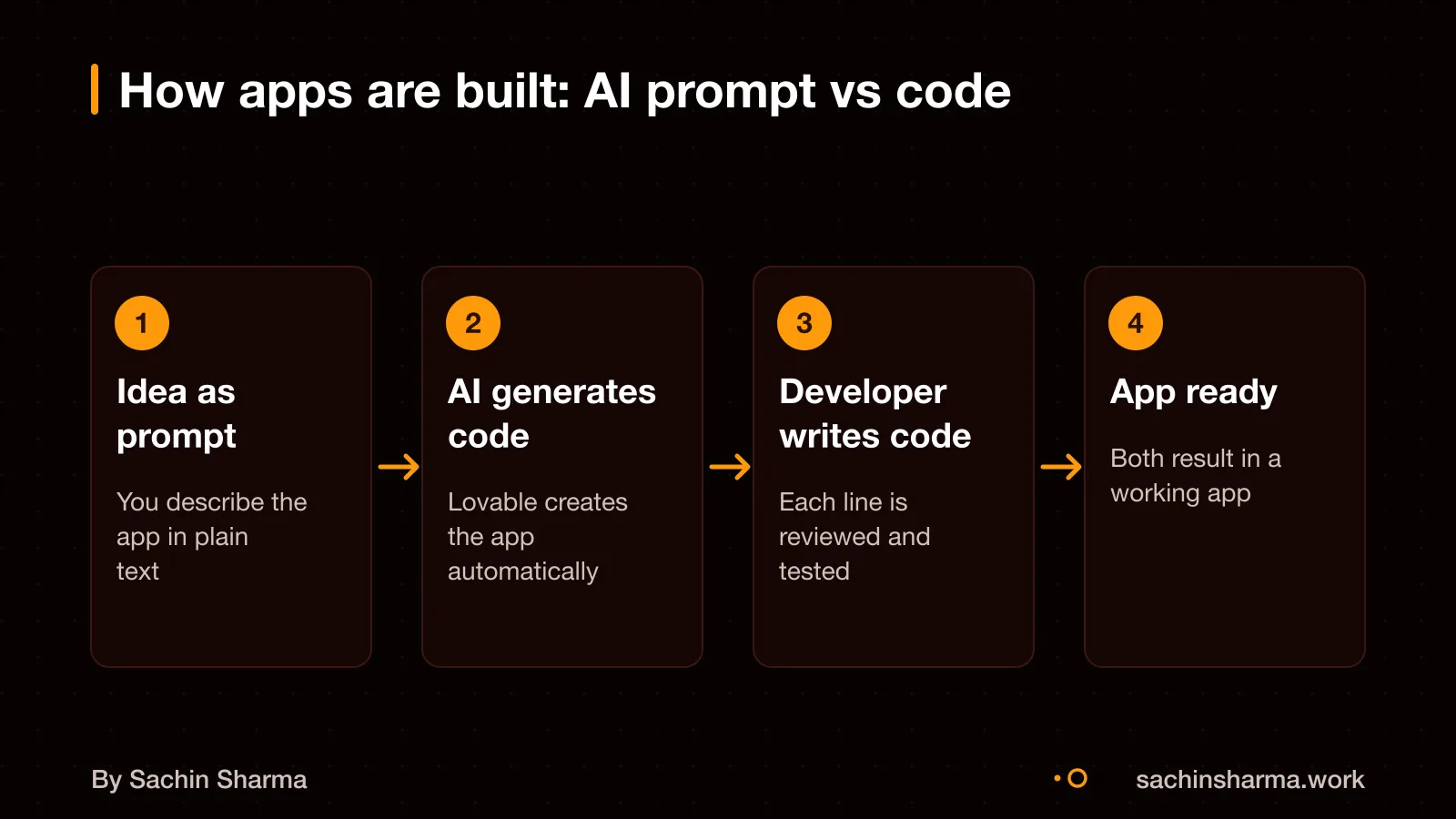
Lovable is an AI app builder that lets non-technical users create web apps by chatting in plain language. It builds apps without code, so you do not need programming skills. The app runs inside Lovable’s system, and changes are made through their interface.
A developer writes custom code to build your app from scratch. This gives full control over how it works, where it runs, and how it connects to other tools. The code belongs to you, and you can change developers at any time.
With Lovable, you are limited to what the platform allows. With a developer, you decide every detail. The trade-off is speed versus control. Lovable works for quick prototypes. A developer is needed for secure, scalable business apps.
When is it safe to use Lovable?
You can use Lovable if your app is a side project, internal tool, or early-stage product with low traffic. It helps turn an idea into a shipped, growing product. This is okay for testing an idea or sharing with a small team.
For example, a simple form to collect feedback from employees or a prototype to show investors can work on Lovable. It is not for apps that handle payments, customer data, or third-party integrations.
You will hit limits when you need custom logic, high security, or to connect with other business systems. If your app grows, you may outgrow Lovable fast.
A developer is better when speed and control matter.
How much does Lovable cost per month in India?
Lovable's monthly cost in India depends on the plan you choose. The Free plan costs $0 per month. The Pro plan costs $25 per month. The Business plan costs $50 per month. These prices are in US dollars and may vary slightly due to exchange rates and bank fees when billed in rupees.
You must verify this directly with Lovable's billing team before treating it as a business expense.
Each plan includes different features. The Free plan allows basic app building with Lovable branding. The Pro plan adds custom domains and forms. The Business plan includes team access and advanced analytics. Exact inclusions are listed on lovable.dev/pricing. You should ask Lovable about overage charges before scaling.
When does a developer clearly beat Lovable?
A developer is the better choice when your app handles payments, stores customer data, or needs custom business logic. If your app will handle money through Razorpay or Paytm, a developer ensures secure, compliant transactions.
When you need custom business logic, a developer builds exactly what your workflow requires. For example, if a sale must trigger a WhatsApp message, update inventory, and create a GST invoice, a developer codes this chain. A developer also writes tests to make sure the logic stays correct as the app grows.
Long-term ownership matters when you want full control over your app’s future. A developer delivers source code you own, hosted on your own servers or cloud. This avoids vendor lock-in and lets you switch developers anytime. As one expert notes, self-hosting gives true ownership of what you built.
If your business grows, a developer-built app scales securely. You control backups, access, and compliance. Lovable may not let you do this. For any app beyond a prototype, a developer gives better control, security, and value.
What are the risks of staying on Lovable for a live business?
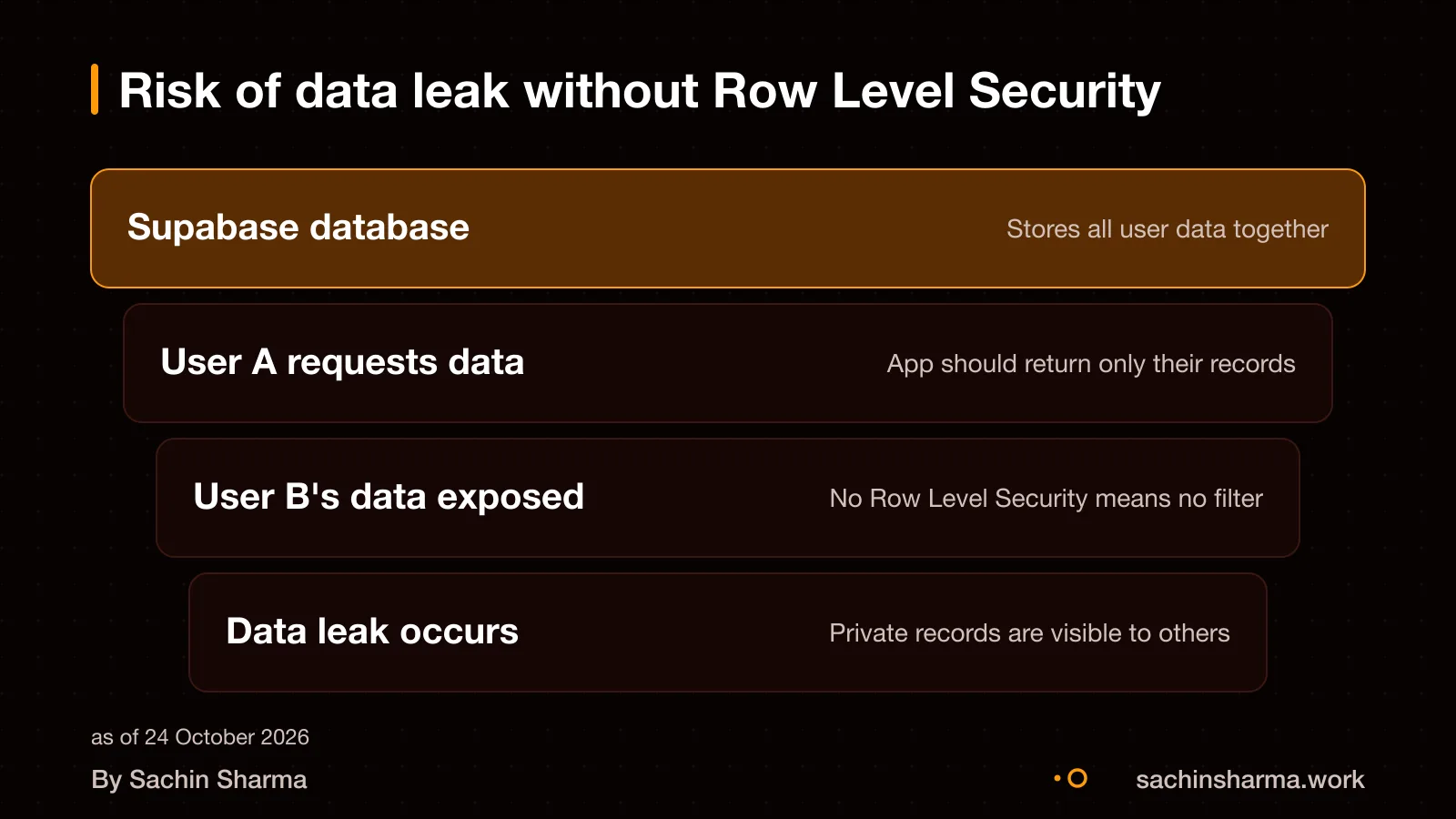
If you keep using Lovable for a live business and RLS is not set on every Supabase table. Anyone who opens your app can read and write your entire database. Lovable apps use the public anon key to connect to Supabase from the browser. Even if Lovable claims SOC 2 compliance, apps are safe only if you check a short list of things.
Technical debt is another risk. AI-generated code often lacks clean structure, making future changes harder and slower. Over time, this debt leads to longer development cycles, more bugs, and security gaps. You may find it costly to add features or fix issues later.
Lovable could also change its pricing or shut down. If that happens, you may have to move fast to save your app. There is no public record of how much it costs to migrate or how long it takes. You would need a developer to extract and rebuild your logic in custom code, which adds unplanned cost and delay.
Can Lovable apps comply with Indian laws like the DPDP Act?
An app built on Lovable may not meet the full requirements of India’s Digital Personal Data Protection (DPDP) Act. Especially if it processes customer data for a business. The law applies to any digital personal data collected in India, or used to offer goods and services here, even if processed abroad. As the business owner, you are the Data Fiduciary and remain legally responsible for compliance, even if Lovable hosts or processes the data.
You must ensure the personal data in your app is accurate, complete, and protected by reasonable security safeguards. This means checking how Lovable stores data, whether it allows data correction or deletion, and if it logs access or breaches. Since Lovable does not publish its security audit reports or data-processing agreements, you cannot verify these safeguards fully.
To comply, you would need written assurances from Lovable that it meets DPDP Act standards, including data minimisation, consent management, and breach notification. As of now, such documentation is not publicly available. For apps handling customer signups, payments or health data, this gap creates legal risk.
You should consult a technology lawyer to assess your specific app’s compliance. They can help you review Lovable’s terms, draft a data-processing agreement, and decide whether custom code. Where you control the infrastructure and audit trail, is safer.
Who owns the code and data on Lovable?
You own the code you build on Lovable, and you can move later and adapt the deployment and the services your app uses. This means the source code is not locked inside the platform, and you can move it to another host or developer later. The repositories are private by default on every plan.
However, your app is still tied to Supabase for its database and authentication. The app connects directly to a Supabase project using a project URL and an anon key, which makes switching to another backend more complex. Moving away from Supabase, or self-hosting it, requires rewriting parts of your app, not just moving the frontend.
So while you legally own the code, practical ownership depends on how tightly your app is bound to Supabase. If you plan to scale or hand over the app to a developer, expect extra work to decouple it from Supabase. For full control, a custom-built app avoids this lock-in from the start.
Mobile app development in Flutter, built offline-first when it matters gives you complete ownership of both code and data, with no hidden dependencies.
How do you switch from Lovable to a custom-built app?
To switch from Lovable to a custom-built app, you first export your generated code. Lovable exports a React (Vite) frontend with TypeScript, Tailwind CSS, and shadcn/ui components. Uses Supabase for the backend, database, authentication, storage, and edge functions. You also get React Router for navigation. State management uses TanStack Query or Zustand.
You must export all environment variables used in the app, such as API keys and database URLs. Lovable injects these automatically during runtime, but when you host the app yourself, you are responsible for setting them up. Store them securely using a secrets manager or `.env` files, and never commit them to version control.
For native mobile apps, you need to build and submit standalone apps to the Apple App Store and Google Play Store. The Apple Developer Program costs $99 per year for an individual account. You must handle code signing, app store listings, compliance checks, and updates yourself or with your developer.
You can deploy the exported app on Vercel, Netlify, Cloudflare Pages, or a VPS with Nginx. Vercel and Netlify offer the easiest setup with generous free tiers. Cloudflare Pages gives fast global performance. A VPS gives full control but requires server management skills.
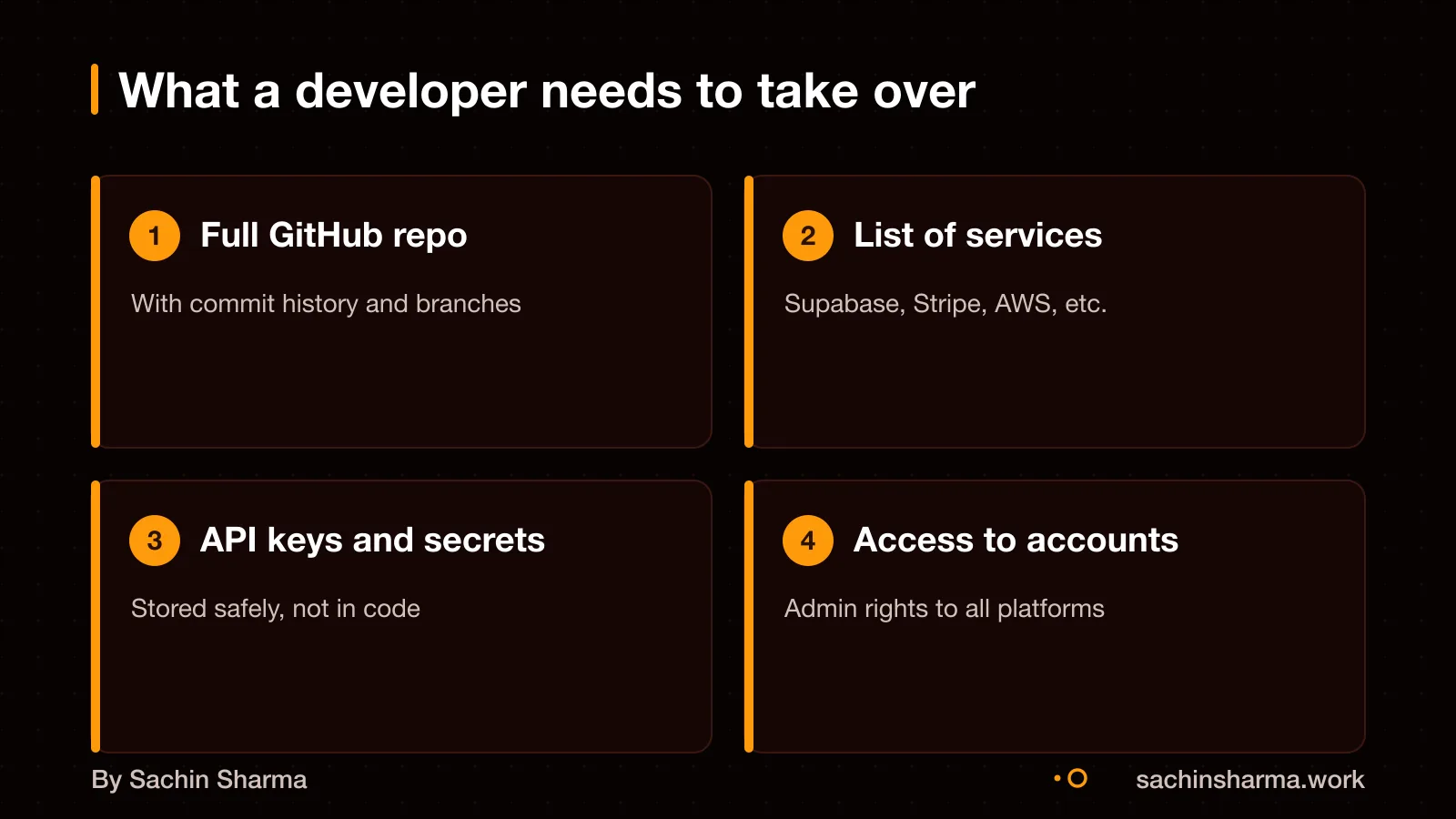
If your app uses Supabase, you can either self-host it or continue using Supabase’s paid plans. Migrating the database to a custom backend may require data export and schema redesign. Share the exported code, environment details, and any third-party service credentials with your developer to begin the handover.
To understand how APIs work in your app, see how APIs work in your app.
What do you need to give a developer to get a quote?
To get a quote from a developer, you must give six clear items. These are: what the app is and who uses it, the one job you want done, what is not part of that job. What it was built with and where it runs, what fixes or attempts have already been tried. What access you can give and when.
Real data is not required at this stage. You can share test data or mock flows to protect privacy. What matters is that the developer can see how the app works and where the changes are needed.
Access timing affects the price. If you can give full access right away, the developer can work faster and quote lower. Delayed or partial access means more back-and-forth, which raises cost. For example, if your Lovable app uses Supabase and you delay sharing the project link. The developer cannot check the database rules or auth settings, leading to guesswork and higher quotes.
Have a quote in hand? Send it to me and I will mark what is missing.
Message me on WhatsAppExample: cost to run an app for three years
As an estimate, assuming a $50 monthly plan and ₹80 per US dollar. The Lovable Business plan costs ₹4,000 per month or ₹1.44 lakh over three years. Self-hosting the same app on a cloud provider is often 3 to 5 times cheaper than Lovable at scale. For example, if self-hosting cuts costs by 4 times, the three-year cost drops to about ₹36,000.
This estimate assumes a simple app with 40 screens and one payment gateway. It does not include the cost to rebuild the app with a developer, which is not known. Maintenance for a custom app is typically 15% to 20% of the build cost per year. But that figure depends on the complexity and is not confirmed for this case.
Want a number for your idea? Send one line on WhatsApp. I reply with what drives the cost and what to cut.
Message me on WhatsAppWhen this advice is wrong
When this advice is wrong
You can stay on Lovable if you are only testing an idea with a small group. For early validation, an AI builder lets you ship fast without code. Once you collect payments or personal data, this no longer applies.
Your app may remain on Lovable if it handles no private data. Public dashboards or read-only tools with no logins are lower risk. But if users sign up or pay, a developer-built app gives you control over security and compliance.
If your investor accepts AI-generated code and does not demand audit-ready software, Lovable might suffice for early traction. But most investors in India expect secure, maintainable code when scaling past prototype stage.
Related reading: Bolt.new alternative for a business that has to ship, Hire a Flutter developer for your first app.
Next step: message me on WhatsApp with what you want to build. No forms, no sales team.
Message me on WhatsAppWhich path fits you
AI app builders like Lovable help you test ideas fast. But some projects need a developer’s control. This page tells you when to switch.
Answer all 3 questions
The outcome appears when every question has an answer. The default is stay on the ai builder.
Honest comparison
Where builders win
Speed to a clickable demo, and low cost at the start.
Where developers win
Data safety, custom rules, stable code, and full control.
Where both lose
An idea nobody wants. Test that first, with either path.
Questions people ask
I recommend Lovable to test your idea and get first users. Bring in a developer when your app handles personal data or payments. This keeps early costs low and lets you validate demand before adding security and compliance.
Yes, you can export your Lovable app code and migrate it. Expect two weeks to understand and clean up the code, as environment variables and Supabase settings must be set manually.
Enable Row Level Security (RLS) on every Supabase table to protect user data. Test by swapping user IDs in the URL to confirm access is blocked. Check this for your case with a chartered accountant or lawyer.
Lovable does not publish a list of supported payment gateways. Check if your app allows custom backend logic to integrate Razorpay or other Indian providers.
Log in as one test user and try to access another user's data by changing the ID in the URL. If you can see it, your app is not secure. Fix this before launching with real users.
You can export your code via Git sync, but you must migrate Supabase and hosting separately. Plan for self-hosting if business continuity is critical.
Yes, you own the code you build on Lovable and can export it at any time via Git sync. This gives you control to move, adapt, or hand it to a developer later.
No, you can use Lovable to test your idea with a small group. Get a code check by a developer before launching with payments or personal data.
Yes at first, but as an estimate, self-hosting can be 3 to 5 times cheaper at scale.