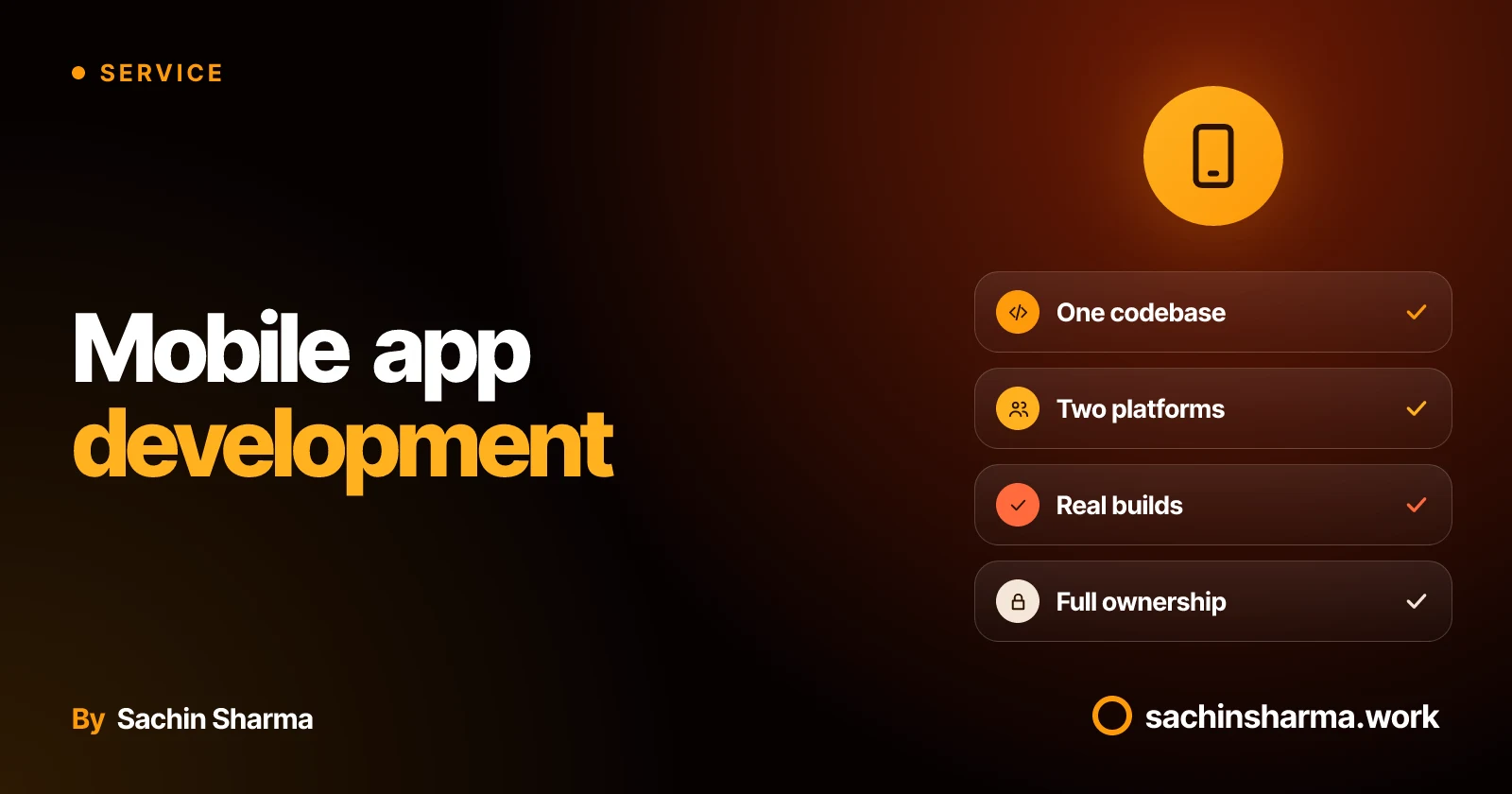
What do you get with my mobile app development service?
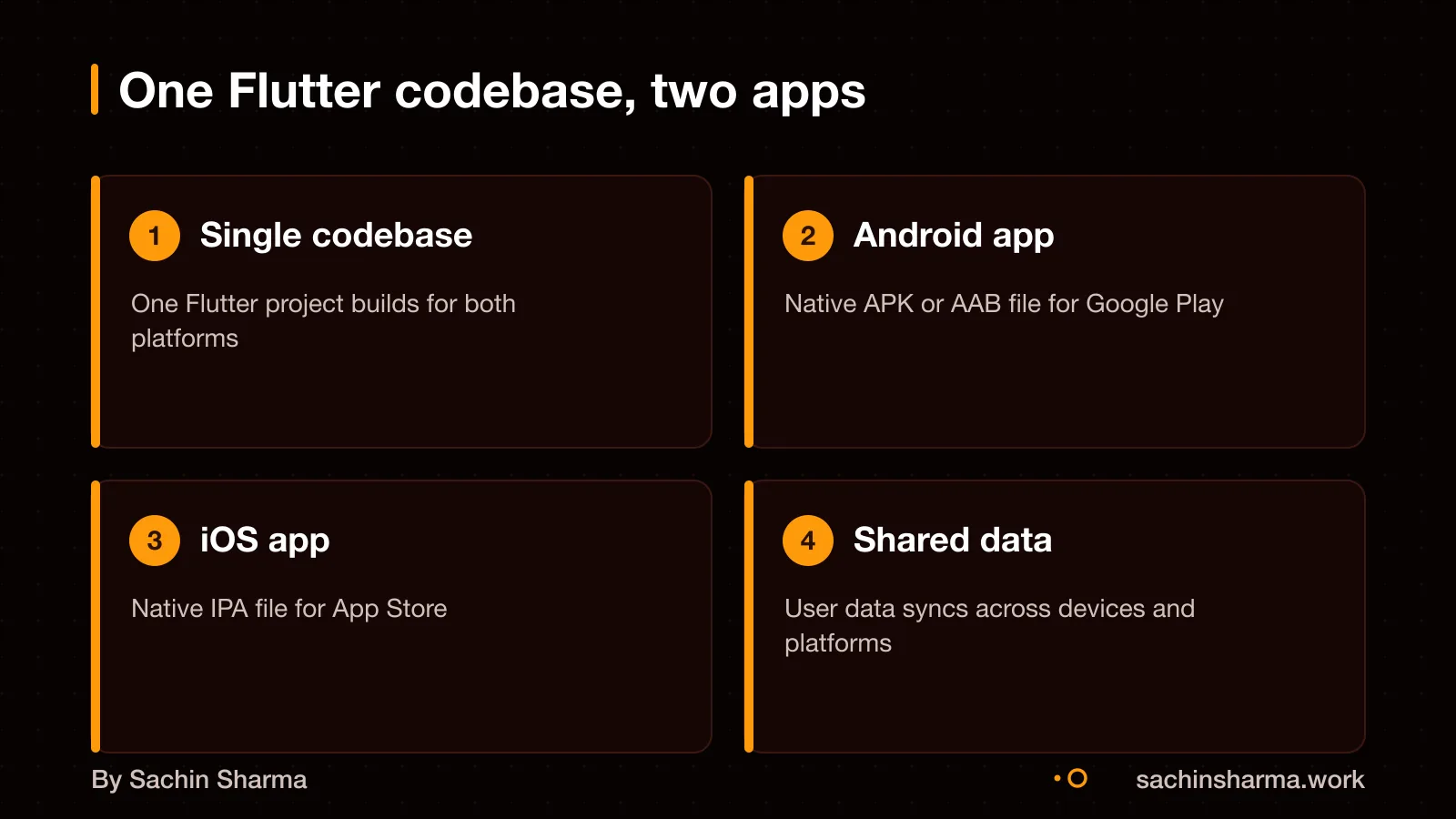
If offline use is needed, the app can offer most or all of its functionality without internet. Along with the full source code, store submission support, and a handover document. The app is yours, you own the code and can update or publish it without me. Flutter builds natively compiled applications for iOS and Android from a single codebase. If internet access is unreliable, the app can still offer most or all of its functionality by storing data locally and syncing later. I sign the app for Android using a secure certificate as required. For iOS, the app can be distributed through the App Store if Apple approves it. You keep full control of app store accounts and future updates.
See how this works in practice: Loopin: an offline-first habit tracker with Google Drive sync
When does a mobile app make sense for your business?
A mobile app makes sense if your users need daily access, offline use or phone features like the camera or push notifications. As of 2025, there are over 8.93 million apps in the global market. With 137.8 billion downloads in 2024 alone, showing high user demand. You should build an app instead of a website when the core experience relies on being fast, reliable without internet, or tied to device hardware.
User needs that justify an app include frequent interactions, personalisation, or real-time updates. For example, a habit tracker like Loopin works offline and syncs later, which users expect from an app. Business goals such as increasing customer retention, enabling field staff to log data offline, or offering a branded tool also benefit from apps.
A website is often enough for one-time visits, SEO reach, or simple transactions. If you are unsure, read App or website first? to compare use cases.
What affects the cost of your Flutter app?
Flutter cuts your cost by letting one codebase run on both Android and iOS. You save time and effort because changes apply to both platforms at once. This makes development about 1.5 times faster than native development. So, if a native app takes 6 months, a Flutter app may take 4.
Complex features raise the cost. Real-time sync, background tasks, biometric login or payment integration need more work. Apps that process data with AI, like Legease (an AI legal-document platform), also take longer.
Offline-first design adds cost. It needs local storage, sync logic and conflict handling. For example, Loopin, a habit tracker, stores data locally with Hive and syncs to Google Drive when online. This extra layer means more testing and code.
As an estimate, assuming a mid-range app with user accounts, forms and cloud sync, going offline-first could add 20% to 30% to the effort. The exact premium depends on how much data must sync and how often. For a detailed breakdown, see how much more does an offline-first app cost?.
How much does a Flutter app cost?
The current cost of a Flutter app in India is not known. [unknown] A 2018 US-based report states $40,000 to $400,000+ for hiring a mobile app development company. This range is outdated and not specific to India, so it is not reliable today. Costs depend on features, design, backend systems, and testing needs. For example, a simple app with offline support and basic sync may cost less than a multi-user platform with real-time updates and admin panels. Since local pricing data is not available, you should get a custom quote based on your requirements.
Want a number for your idea? Send one line on WhatsApp. I reply with what drives the cost and what to cut.
Message me on WhatsAppHow long does it take to build a Flutter app?
The typical timeline from start to launch is not known. [unknown] You should check with your developer for a timeline based on your app’s features and team size.
Flutter does speed up development compared to building two separate native apps. It allows one codebase to run on both Android and iOS, cutting duplicate work. This gain comes from shared logic, UI, and testing across platforms.
For example, Loopin and Legease are Flutter apps that benefit from shared code across platforms. Because the same code runs on both phones. Features like offline storage with Hive or sync via Google Drive are written once. Still, complex features such as real-time audio or video may take longer and slow the overall pace.
Since no data gives a standard duration for Indian projects, do not assume speed means a fixed deadline. Each app depends on scope, design depth, backend needs, and review cycles. Ask your developer for a milestone plan with working builds every few weeks to track real progress.
What slows down app development most?
Unclear requirements or frequent design changes may contribute to delays in app projects. When you do not finalise the app’s core features or screens early, each new change can reset progress and extend the timeline. For example, if you approve a flow for user login but later ask to add biometric access. Social sign-ins, the team must rework that part. Frequent changes during design may slow delivery. Design-stage failure, not testing ideas early, increases this risk. However, the top cause of delay in app projects is not documented. What is clear is that stable requirements and timely feedback help keep development on track. To reduce delays, finalise your main user flows and screen designs before coding starts. Review prototypes early and confirm what stays fixed and what can change later.
Flutter vs native: which is right for your app?
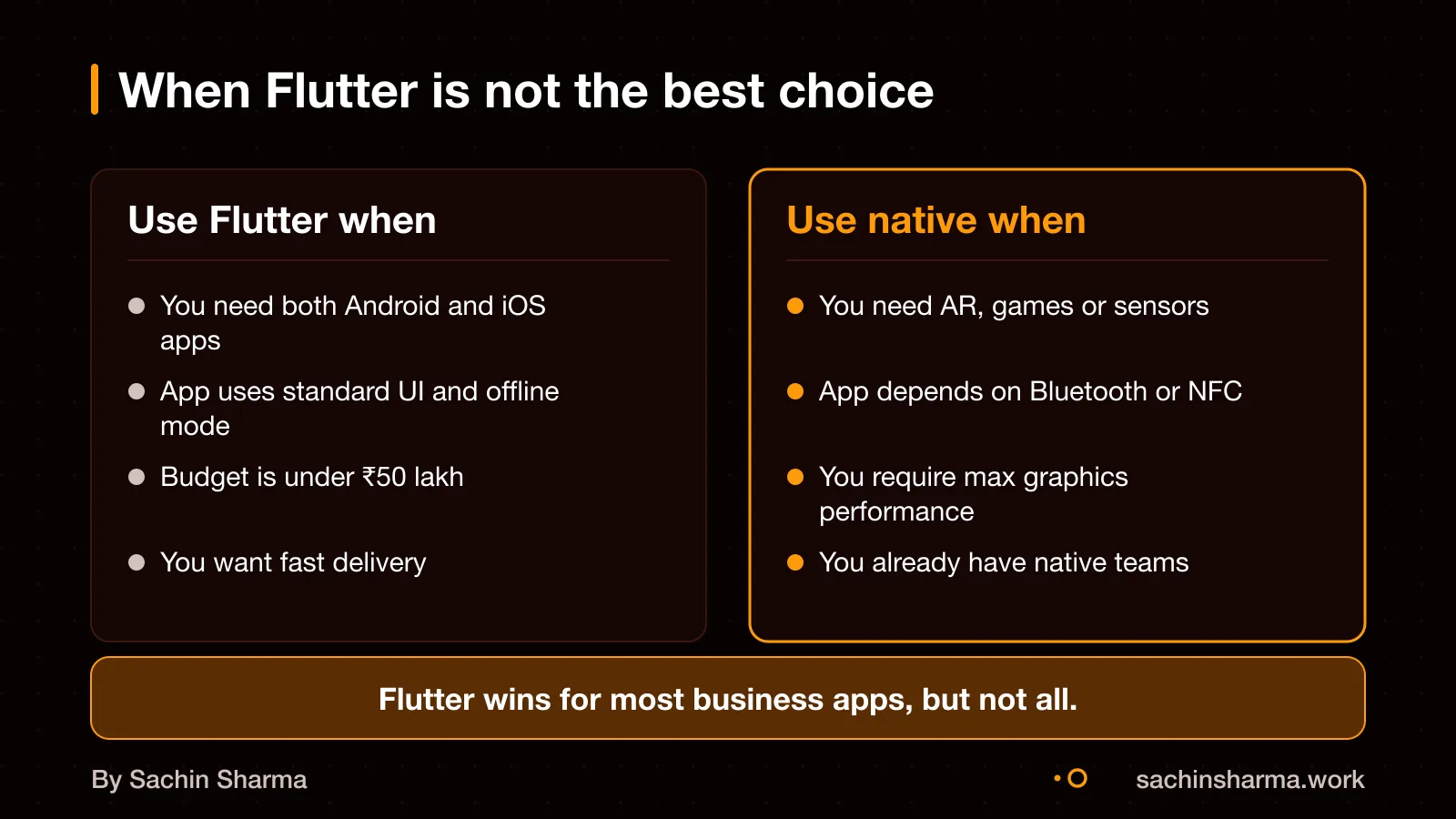
This can accelerate development by about 1.5 times compared to native development. You save cost because it works on multiple platforms. It is best when you need speed, consistent design across platforms, and lower budget use.
Native development uses platform-specific tools like Kotlin for Android and Swift for iOS. It gives the best performance and full access to phone features like the camera, sensors or background processing. It also follows each platform’s design rules closely. Choose native when top speed, deep hardware access, or precise UI control matters most.
For most small businesses in India, Flutter is the better choice. You get a working app faster and at lower cost, with no need to manage two codebases. If your app does not need advanced graphics or system-level features, Flutter meets your needs well.
How does your app get built, step by step?
Your app is built in six stages: planning, design, development, testing, deployment, and maintenance. In planning, we define your app’s goals, features, and audience. Next, design shapes the user interface and experience so the app is easy to use. Then, development turns the plan into working code, with real app builds made at each milestone. You get these builds to test on your own phone, so progress is visible and verifiable early and often. Testing checks that all features work correctly and meet your needs. Deployment prepares the app for the stores: Android apps must be digitally signed with a certificate before installation. I help you publish on Google Play and the Apple App Store. Maintenance keeps your app updated and running well after launch.
Loopin is an offline-first habit tracker built with Flutter using Hive and Google Drive sync. With real builds shared at each stage to confirm progress and collect feedback. This way, you always know what is being built and can guide the direction without surprises.
How do you see progress and verify the app works?
You test real app builds on your own phone at every stage, not just designs. This lets you check how features work, how fast the app feels and whether offline use is smooth. Each milestone includes a working version for testing.
You can test the app before launch using these real builds. They are not mockups, they run on Android and iOS devices. You get them early and often, so you can give feedback while changes are easy to make.
Offline behaviour is tested by using the app without internet. In offline-first Flutter apps, the system may show locally stored data and then emit data from the server. This flow is checked on device to make sure it works as expected.
At each stage, you get proof that the app functions. For example, if a screen saves data locally, you see it work without Wi-Fi. If it syncs to the cloud later, you watch that happen too. Testing ensures all parts interact correctly.
Not sure if your project has this risk? Tell me the plan in two lines and I will say yes or no.
Message me on WhatsApp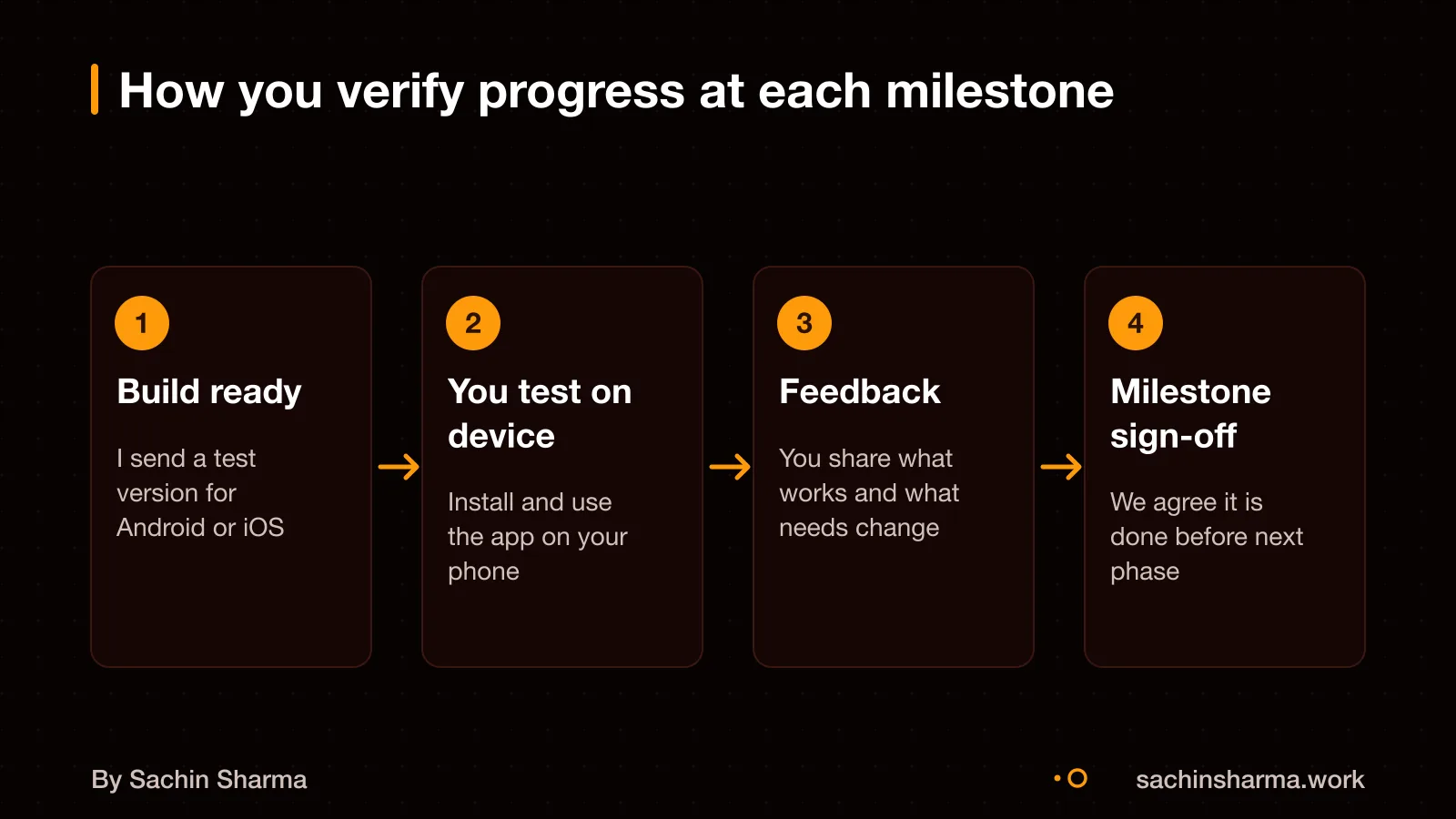
Who owns the source code and app store accounts?
You own the full source code once the project is complete and paid for. The contract will confirm the transfer of code rights to you, so you can update, publish or hand it to another developer without needing me. I do not keep control of your app’s code.
You must set up and control your own App Store and Play Store accounts. I will guide you on how to create them correctly for a business, and help with the first app submission. But the accounts stay under your name and business details, not mine. This keeps your ownership clear and avoids future access issues.
As this depends on the contract, we will confirm the exact terms in writing before work starts.
What support do you provide after launch?
Post-launch bug fixing terms vary and must be confirmed in your contract. You should check your contract or agreement for whether post-launch bug fixes are covered, as this depends on the terms you sign. Updates or new features may be billed separately unless stated in the contract. Post-launch support terms are not standardised; confirm what is included in your agreement. Such as bug resolution windows, response times, or update pricing, before the project starts. Always ask for the support scope in writing.
What is in it, and what is not
One codebase for Android and iOS, built offline-first when your users cannot count on a signal, by the person you speak to.
- 01A written scope
Screens, features and integrations listed in plain language, with the things left for version two named.
- 02Design you can react to
Key screens and the main flow drawn before they are built, so you change your mind on paper, not in code.
- 03The app itself
Flutter for Android and iOS, with offline behaviour decided up front rather than patched in later.
- 04Testing builds every milestone
Something real on your phone at the end of each milestone, not a demo at the end.
- 05Store submission
Listings, builds and submission on Google Play and the App Store, under accounts you own.
- 06Handover
Source code in your repository, accounts and keys in your name, and a short document on how it fits together.
How it runs: milestones you can test
- 1Scope and flow
You can test: A written scope and the main user flow, agreed.
- 2Clickable core
You can test: The core journey working on your phone, with placeholder content.
- 3Feature complete
You can test: Every in-scope feature present and testable.
- 4Store ready
You can test: Release builds, listings and submission done; handover started.
Right for you if
- You have a clear user and one problem to solve first.
- You need Android and iOS together and want to keep cost sane.
- You want to talk to the person writing the code.
Look elsewhere if
- You need a large team across many specialisms at once.
- You need a game engine or heavy native hardware work.
- You want a fixed number on a one-line brief with no scope.
How it is priced
Price follows scope, not hours I happen to spend. You get a written scope first, then a price split across the milestones above, with a stated process for changes. A single lump sum on a vague brief is where projects go wrong.
Questions to ask before you sign, with anyone
- Who exactly will write my code?
- What is not included, written down?
- What can I test at the end of each milestone?
- Whose name are the store accounts and repository under?
- What happens if we stop halfway?
Quick answers
Why Flutter?
One codebase produces both Android and iOS apps, which cuts cost and keeps the two in step. It suits most business apps; it is not the answer to every problem.
Can the app work without internet?
Yes, if it is designed for it from the start. Offline behaviour is decided in the scope, because retrofitting it is expensive.
Do I own the code?
Yes. The repository and store accounts are set up in your name from the start.
Questions people ask
I use Flutter because it lets us build one app for both Android and iOS from a single codebase. This can accelerate the development process by about 1.5 times and may save costs compared to building two native apps. Flutter is ideal when speed, cross-platform consistency, and cost-efficiency matter most.
Yes, if designed as offline-first from the start. The app stores data locally and syncs when back online. As soon as you open the app, it shows saved data, then updates from the server when connected. See how Loopin works offline with local storage and Google Drive sync.
You will own the full source code once the project is complete and paid for. The contract will confirm the transfer of all rights to you. For app store accounts, you should set up and own them directly. Confirm both in writing before work starts.
Post-launch bug fixing is not promised unless included in your contract. You should confirm the length and scope of support before the project begins. Common practice includes a short period for critical bug fixes after launch.
The timeline depends on your app's features and complexity. Flutter can accelerate the development process by about 1.5 times compared to native development. Its single codebase for Android and iOS applications accelerates development cycles. For a basic app, this could mean weeks instead of months, but exact time depends on scope.
Your app must meet Apple’s Documentation and Program Requirements to be submitted for App Store distribution. Android requires that all APKs are digitally signed before they are installed on a device. If it handles personal data, you may need to comply with India’s DPDP Act. Check this for your case with a lawyer.
I use a repository pattern that combines local and remote data sources. The app reads from local storage first, then syncs with the server in the background. For example, the UserProfileRepository uses a local database and a remote service.
If the project stops early, you get all completed code and assets up to that point. However, what is delivered depends on how much was agreed and built. Make sure the scope and handover terms are clear in the contract before starting.